
- IT Support for Construction Companies
A builder’s IT lives in two places most providers treat as one. Head office, where the estimators and finance sit, and the site shed, where a project manager on a temporary network is trying to open a federated model on a laptop that has been in a ute all week. The shed is where the money is made and lost, and where generalist IT support for construction companies gives up, because not every IT provider has stood in one.
We’re NexSys. We’ve worked with construction and infrastructure contractors since 2013, alongside the architects and engineers they build for, and nobody outside that. Rick Notari, who leads our digital platform work, spent thirty years in AEC delivery including Mirvac and has run enterprise deployments of Autodesk Construction Cloud. Long Vo, who runs our service desk, was National IT Manager at Hames Sharley.
- Site connectivity
IT support for construction companies starts at the construction site, in construction environments a generalist never sees
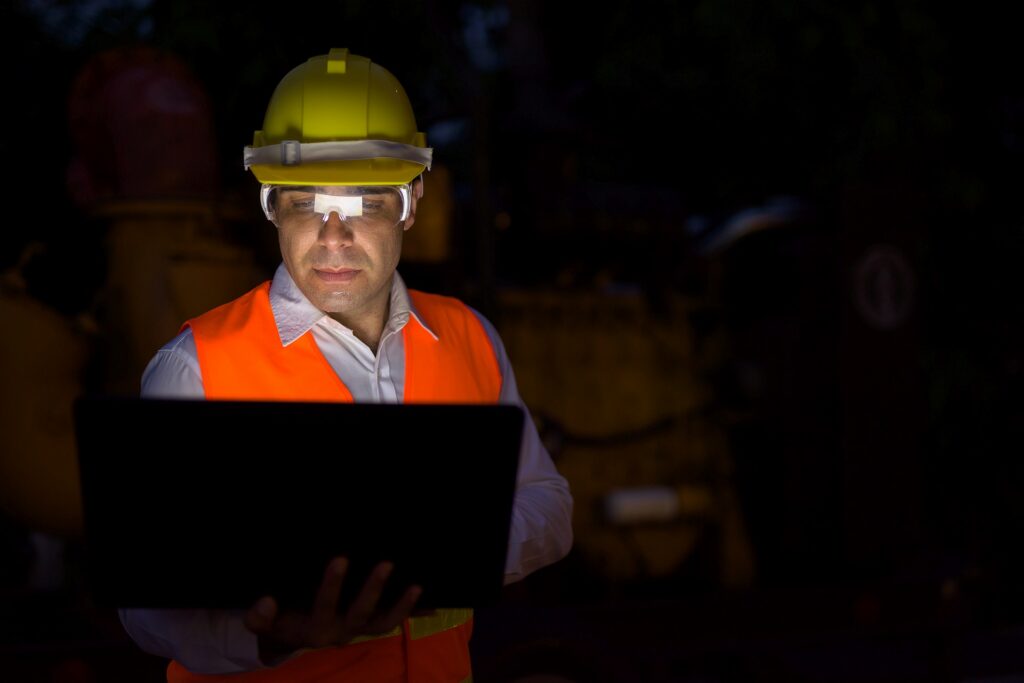
A job site office is a temporary network that has to be secure on Monday and gone in eighteen months, keeping site teams, mobile teams and office staff on the same project files, with reliable access to drawings from a tablet in the rain. We build them as a documented kit rather than a one-off: connectivity ordered the day the site is confirmed because the carrier is the long pole, a firewall that integrates with head office, wireless that reaches the crib room, printing, and identity-based access so the person signing in at the shed is the one the directory knows. All field activity is logged centrally, so a change made on site is visible to the desk.
Here’s the opinion some construction IT companies would argue with. A site office should be on the same identity system, the same security policy and the same monitoring as head office, not a separate kingdom run by whoever the PM knows. Every time we inherit a job where the shed has its own router, a Wi-Fi password on a whiteboard and a shared login for the model viewer, we find a subcontractor who still has access to a project that finished last year. Every time.

- Access
Construction projects are crowds across multiple sites, so contractor access controls expire with the contract
A construction project is a crowd. Subcontractors, consultants, certifiers, the client’s representative and the superintendent all need something from the common data environment, and none should keep it afterwards. We run role-based access aligned to the project structure, with time-bound contractor accounts that expire automatically and access reviews on a cycle. Mobility mustn’t introduce exposure across multiple locations. A foreman’s tablet gets the same conditional access as a director’s.
That matters more now that the frameworks are written down. Infrastructure NSW’s 2025 Digitalisation and Data Policy requires information requirements and the common data environment on state infrastructure projects to follow ISO 19650, with an 18-month transition, and Transport for NSW’s contractor CDE standard defines the work-in-progress, shared, client-shared and published states a deliverable moves through. Queensland has required BIM on government construction projects worth $50 million or more since 1 July 2019. A CDE without governed access meets none of that, whatever the brochure says.
- Recovery
Backups a compromised account can't delete, cloud infrastructure that keeps teams connected, and project data that outlasts the job
Two recovery problems are specific to builders. The first is that project data and project information have to be recoverable long after practical completion, because defects, warranty claims and the occasional dispute arrive years later. We archive by project, immutable and indexed, so a 2023 superintendent’s instruction can be produced in 2030. The second is ransomware. The Australian Signals Directorate’s 2024–25 report puts the average self-reported cost of a cybercrime for a medium business at $97,200, up 55 per cent in a year, and Synology’s research puts backups as the first target in 94 per cent of ransomware attacks.
So we build backups that are stored where a compromised account can’t modify or delete them, which is what Essential Eight Maturity Level Two asks for. We test them by restoring a live project rather than by reading a log. Recovery point and recovery time are written into the agreement as numbers, classified by how critical each system is, because a tender portal and a timesheet app don’t deserve the same objective.
- Security
Cyber security for the construction industry: cyber threats, data breaches and the questionnaire that arrives with the tender
Government clients in Western Australia, South Australia and Queensland all point contractors at the ACSC’s Essential Eight, and the WA policy goes further, requiring service providers to report an incident within 24 hours of detection and accepting penalties or termination for failing to. Tier 1 head contractors pass the same questions down. Cameron Zad, our Director of Technical Services, has a view some competitors would argue with: the first security dollar goes on identity rather than another appliance, because a stolen password walks straight into the project drive and no firewall ever stopped one. Multi-factor on every account, conditional access, and application control that copes with the estimating and scheduling tools a builder actually runs.
A caveat, stated up front. If you’re a subcontractor with no BIM, no government work and a dozen staff, a well-run Microsoft 365 tenant and a good phone system are enough. Call us when the head contractor sends the first questionnaire.
- The desk
Managed IT services for construction operations, with office and field teams on one desk
Construction sites don’t keep office hours. Neither does the desk, and the support services are built to keep projects moving with fewer delays. Proactive monitoring of your IT environment around the clock, automated backups, a 24/7 service desk that triages by business impact so a model that won’t open at the shed outranks a head-office printer, patching scheduled around pours and handovers rather than Tuesday nights, endpoint protection on every laptop and tablet, backup and disaster recovery, and Autodesk, Bluebeam and Procore licence management, with the project management systems and BIM software on the cloud platforms most construction companies already pay for treated as part of the IT environment, not someone else’s problem. The person answering has seen a site network before.
If you already have an internal IT team, we don’t ask them to step aside. Co-managed IT means they keep head office and the relationships, and we take the site builds, the security tooling and the after-hours pages. The split is written down before the first shed goes in.
- Before you call
Questions builders ask first
How quickly can you stand up IT for a new site office?
The build is a documented kit and goes in quickly. The carrier is the long pole, so we order connectivity the day the site is confirmed, not the week the shed arrives.
Do subcontractors get access to our project systems?
Yes. Access is role-based and time-bound. It expires when the contract does. Every login is logged, so nobody keeps a way into your CDE after leaving the job.
Do you support the project management systems as well as the network?
Yes. Procore, Aconex and Autodesk Construction Cloud are where a builder’s business data lives, so the desk supports them as first-class systems. That runs from single sign-on and secure file access to the accounting and timesheet integrations. Complex issues inside the vendor’s platform go to the vendor. We stay on the call.
What about cloud computing and cloud services for a construction business?
Most construction businesses are already there: Microsoft 365 for the office, a cloud CDE for the projects, and increasingly a cloud file platform instead of a head office server. What we add is the secure systems around them, so data loss on a site laptop doesn’t delay projects and the whole business isn’t one stolen password from a bad week.
- Keep reading
Related pages
Book a Strategic Review
A discovery call, a look at your environment, and a written summary of what we would change and what we would leave alone. No deck. No follow-up sequence.
- Tell us what's going onThree short steps, about a minute. No sales deck.
- A consultant gets back to youWithin one business day, by phone or email, whichever you pick.
- You get it in writingWhat we'd change, what we'd leave alone, and what each costs.
Autodesk Elite Partner · Supporting AEC firms since 2013 · Melbourne, Sydney, Brisbane, Adelaide and Perth